
Reflection: "We're Commanded to Love"Just like the ancient pagans that we read about in the Old Testament, some people of today still want to have a little bit of religion at critical times, but they resist allowing God any greater claim on their lives.
Perhaps they can’t see why God deserves any greater commitment from them. Or they’re afraid that they’ll draw attention to themselves by being either too religious, or not religious enough. More likely though, they just don't see what God has to do with them, or with their lives, in this modern world. I’m a bit in two minds about people like this, who approach the church for religious ceremonies. For example, just to get their children baptised, to get married, or for a burial. On the one hand, I feel like saying that if they don't really want God in their lives, why bother with these ceremonies.But on the other hand, I think that baptisms, weddings and funerals are great occasions for people to discover that the church, and religion, are still of great value and that God isn’t actually distant, or fickle, but can feel near, present and constant in their lives. We know that God, in and through his son Jesus Christ, and the ongoing love of the Holy Spirit, cares for our lives and we come to understand that a relationship with him is not arbitrary and vengeful, but gentle, warm and gracious. The readings this week contain the words "God is love" and Christians over the years have become very familiar with this idea – maybe a bit too familiar - as often they forget what an astounding concept the love of God actually is. We know that the Apostle Paul did the majority of his work amongst the Greeks in the Mediterranean region. When speaking to them about the Gospel - the Good News of Jesus Christ – he would probably have expected them to think of it as folly, or foolishness, knowing how it would go against their experience of life and their multitude of pagan gods. But he showed them how the God of his people, the one true God, was different - how he was a God of love. Nowadays, the vast majority of this planet's inhabitants experience a life far different to ours in Australia. There’s so much poverty, infant mortality, recurring famines, fatal epidemics, natural disasters and deadly wars. And even in our western world, so many people struggle with 1st world issues, such as joblessness, illnesses and suffering, bill stress and foreclosure on their home mortgages. So, to claim that God is love, goes against much of our common, human experience.We can wonder where God’s love really is, noting that it can seem so distant, as we look at the world’s problems. Nevertheless, as Christians, we must persist, even singing words like: "God is love and where love is, God is there." We proclaim that God's love transcends and pervades our common human experiences. Perhaps we Christians sometimes proclaim this concept too glibly, sentimentalising this love. Perhaps, when things are going all right for ourselves, we forget that this isn’t the case for everyone. We forget that God's love isn’t obvious to everybody and, even as Christians, we sometimes wonder why, if God is love, does he let bad things happen and let our fervent prayers for good in the world, go unanswered. The truth is, that God doesn’t “let” things happen. Right back in the Garden of Eden, he gave Adam and Eve the right to choose and have free-will for their actions. Unfortunately, we humans are the ones who are stuffing up God’s wonderful world and, even though we aren’t sure why these things happen, we must hang on to our faith, knowing that God’s love will eventually prevail. Is our belief (that God is love) committing us to a path that others would see as counter-cultural, or even radical? Or could it just be that it’s some sort of sentimentalist claptrap, the opiate of the masses. Either we’re bearers of a new truth about God and the world, or we’re to be pitied as the greatest of fools. And, maybe, that’s the way of the Gospel. We are bearers of the message that God is for us, with us, he cares for us and, most of all, he loves us - all of us. This message should strike us – as it strikes pagans both ancient and modern - as a message so good that it borders on the incredible. And, except for the life, death and resurrection of Jesus Christ, this Gospel of ours would be unbelievable. Through Christ, God brought divine love to common human experience. Not to trick us, judge us, or condemn us - but to join us - to fully live our common human experience. To be born, to live, to suffer, to die - all out of love - and to rise again to show that nothing, not even death, can extinguish this love. This is our hope, our calling, and our mission. To get involved with God’s love makes us vulnerable to criticism from others. Ultimately, we must answer to God and not to man. Our epistle this week reads, "Whoever does not love, does not know God, for God is love." Our mission as Christians is to lift up that love, as the hidden key to life - now revealed in Jesus Christ - to see all love as an echo of the love of God, to name all love as God's, and to be drawn to this love and to reflect it for the world. Because saying "God is love" isn’t sentimental, it isn’t easy, and it isn’t frivolous.It’s a bold confession and it demands a bold commitment and faith. How will anyone believe this faith unless they see it working in and through our lives? How will anyone be convinced that beneath the pain and suffering of common experience, flows divine love?How will anyone know of God’s love, unless we show it in the way we live? Having been loved by God, we must likewise love our neighbours, and not just those closest to us or those who are easiest to love, but our love must extend to places and to people where love is foreign, where love is absent, where faith in love has faded or died and to those whom we find it hardest to forgive. To be loved by God is to be given a mission: to take this bold faith to those who haven’t yet accepted it. Whether they’re the destitute, the broken, those who’ve lost hope, or even just those who haven’t heard about God’s love for them, we must tell them of this truth and show them that it’s true, through our lives and actions. No one will believe it unless they see it in us. Do you feel like that’s something you can do? Showing love like that isn’t easy, but it is God’s command to us to: “Love the Lord your God, with all your heart, soul and mind and love your neighbour as yourself.” That’s how we should be living our lives – for the benefit of others – and not for ourselves. “And they’ll know we are Christians, by our love, by our love. And they’ll know we are Christians by our love.” Pastor Rick
0 Comments
Reflection: "Greater Love Has No Man"Next week we’ll commemorate Anzac Day, a time when we remember the sacrifice of so many brave men and women in armed conflicts - such as Gallipoli in 1915 - and far too many more wars since then.
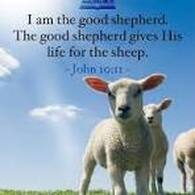
For those of us who have never seen the effects of war close up, it’s hard to imagine the impact it would have on those who participated. I’m sure that any of you who have in previous years watched TV programs about the ANZACs, where some of the stories of those brave soldiers, were related – sometimes in graphic detail – could not remain unmoved and not have the greatest respect for those young Australian and New Zealand soldiers. They were from all walks of life and very few had any military experience. Some were as young as 14 and lied about their age so that they could join their mates and fight for King and country. We owe them a great debt and, as the numbers of those who served are dwindling, I think it’s great that our young people seem determined to keep the memories alive and are embracing the commemorations by participating in Dawn Services and Anzac Day marches, etc. Many years ago, a South Australian songwriter named Eric Bogle wrote a song called “And the Band Played Waltzing Matilda.” In it, the main message is that the young lives lost at Gallipoli were sacrificed for no good reason and that even when the injured troops came back, the people mostly ignored them. He was pilloried at the time for writing an unpatriotic and un-Australian song, attacking our brave soldiers. At one of the Katoomba Music Festivals, I heard him explain that his aim in writing and performing the song was not to denigrate any of our brave soldiers, but to simply amplify the pointless futility of war and its resultant loss of so many brave young lives. Wars very rarely achieve what they set out to do and they usually result in great destruction and huge losses of lives. Just look at the current conflicts in places like Ukraine and you’ll understand.WW1 was no different, but the enduring camaraderie and spirit of the ANZACs was the one great and lasting positive result that came out of the disastrous Gallipoli campaign. Most our young people of today have not been personally exposed to the horror of wars, but it’s great that they can still revere the bravery and courage of the people who fought in them.We may think of this phenomenon as one that has only been formed in the last hundred years, but our bible readings this week remind us that the concept of giving your life for others, has been with us since biblical times. The imagery of the good shepherd, caring for each of his flock and being prepared to give his life to save theirs, conjures up images that are easy to apply to our war-time scenario.I believe that these words must surely have comforted those brave soldiers as they faced their enemies, unsure of whether they would ever see their loved ones again.Words form the bible such as: “Even though I walk through the darkest valley, I fear no evil, for you are with me.” “The good shepherd lays down his life for his own.” “No one takes my life from me, but I lay it down of my own accord.” and “We know that we have passed from death to life, because we love each other.” Theirs was a sacrifice of love. So strong that they were willing to make that ultimate gesture, in order to protect the ones they loved - their flock. So they put themselves into the role of the shepherd, just as Jesus had done, to take care of others, even if that meant that they had to give up their own lives. It makes me feel a bit inadequate, as I live a very comfortable life in this day and age, in comparison to the horrors that the ANZACs went through. Would I be prepared to also make that ultimate sacrifice, if called upon so to do? I like to think that my love of God would give me the courage to take that course of action, to protect others. John 15:12&13 puts it succinctly, when Jesus tells us that: “This is my commandment, that you love one another as I have loved you. No one has greater love than this, to lay down one’s life for one’s friends.” Jesus set the standard over 2,000 years ago and we now have to try our hardest to measure up to him. Maybe that doesn’t mean that we’ll have to end up dying for our friends, but it does mean that we have to show them the love of God that we have received and how it can be theirs, too. At a Gallipoli Dawn Service many years ago, our then Prime Minister, Tony Abbott, appropriately said that:“a generation of young Australians rallied to serve our country, when our country called, and they were faithful, even unto death. They were as good as they could be in their time, now let us be as good as we can in ours.” Of course, we can’t do that by just staying in our safe, warm homes and singing hymns once a week on Sunday. We have to be out in the world, prepared to be exposed to its ugliness and give our all to show that we are different. Different because we’re God’s children and we have that belief that he wants others – the flock – to also know and love him. They can’t do that if they don’t know about him and realise that he is waiting like a loving parent for them to come home.So let’s make a decision today to put ourselves out – move out of our comfort zone – and tend our flock. That may be as simple as talking about your faith to the person next to you at the dining table, or the stranger you meet when you’re out and about. Whatever situation it is, it still takes courage to be strong for the Lord.God will give you the words that you need, but you need to initiate the conversation with the other person. The fourth stanza of Laurence Binyon's poem “For the Fallen”, which was first published in The Times in London on September 1914 and which is now known as the "Ode of Remembrance", or simply, “The Ode”, says: “They shall grow not old, as we that are left grow old; Age shall not weary them, nor the years condemn. At the going down of the sun and in the morning We will remember them.” And our response is: “We will remember them. Lest we forget.” Pastor Rick Reflection: "God's Children"What’s something that every person reading this reflection has in common?
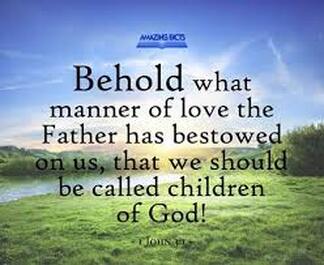
No one’s excluded? What’s the ONE experience that we know for sure we have ALL had? We can’t say for sure that all of us are Australian citizens - probably not. Or that all of us are definitely Sydney Swans, Waratahs ot Sydney FC supporters, or even that we’re all Uniting Church members. But there’s ONE thing that we know, for sure - we’re all human beings - breathing, drinking water, and eating food. Another thing we all have in common, is that we’ve all experienced childhood – and each experience is unique. Now, not all of us will be parents - mothers or fathers - or even have siblings, but childhood is common to us all. And so, we can answer the question, “What’s it like to be a child?” We all know what it’s like to be a child, experiencing new things, playing with toys, with others, or amusing yourself. Probably every child in the world knows what it means to play, as they’ve played with a stick, a ball, or had a race. Every child in the world has known what it meant to “go and hide” - to go hide in the bushes, in the trees, or in the dark and then have the thrill of the game. Unfortunately, some kids have to hide for fear of their lives. But at some time, they will probably have played with other kids. What’s it like to be a child? t’s to be creative, imaginative and explore the world around us.Children like to look under a leaf, touch a blade of grass and fondle it and wonder about it. Children are delighted to find a coin, a pin, a rock, something under the lounge. Most children have been frightened by thunder and lightning at some time, or looked at the clouds and wondered what they’re made of. Children wander about and explore the world they live in. What’s it to be a child? We should all know. We’ve all been there. A young child generally can’t take care of themselves - they need nurturing and are dependent on others. Somebody has to meet their needs for food and water and warmth and clothing, because children are vulnerable. Even in the poorest of poor nations, a child needs to be loved and the same is true in the richest of nations.Children need to be loved by their parents, to experience the warmth and tenderness from another’s body. To nurse at a mother’s breast, be held and squeezed and hugged and to be delighted in. Every child in the world craves to be loved, as much as they need the food, water and clothing to sustain them. When I look at my own childhood, I sometimes wonder what’s happened to the little child in me that I knew so well - the little child that lived inside of me - I wonder what happened to all the little boys and little girls that I knew. When I look at our young grand-daughters, I see that they’re polite, energetic, fresh, vital, open, happy and kind. And then I wonder what they’ll be like in ten years’ time, when they’re teenagers - young women. Will I have to ask myself the question, “What happened to the little girls inside of them?” John writes, “See the great love the Father has given us, that he has called us God’s little children.” Eight times in this letter, John uses the phrase “little children”. To call the adult followers of Christ “my little children”, or “my little loved ones,” suggests that the author, John, was an older person when he wrote those words. In fact, scholars say that he was quite an old man when he wrote this. I guess we could call him old Grandpa John. We actually know a lot about John. He called himself the disciple whom Jesus loved. John was the disciple whom Jesus had entrusted with his mother Mary, when he hung on the cross. John was also the leader of the Christian congregation in the city of Ephesus. His skin was probably old and wrinkled by the time he wrote these words. We imagine that his heart was old and wise and was filled with great, great love. He had become the master, the beloved old teacher - the wisest of men. He was the last living disciple of Jesus. And people would sit around him, sit at his feet and listen to him teach. The wise old man would say, “My little children, do not sin.” “My little children, your sins are forgiven.” “My little children, do not love in words, but love in deeds and in truth.” “See the great love that God the Father has for you, my little children, that he has called you his children.” Jesus said, “Let the little children to come unto me and forbid them not. For of such is the kingdom of heaven.” The Bible teaches, Jesus teaches, and old Grandpa John teaches that by calling us “little children”, God reveals his love for us. “My little children.” “My little loved ones.” By naming us his children, this shows that God loves us. God loves us immensely and knows our vulnerability, our helplessness, our childishness, our foolishness, and he’s patient with us, because we are his little children. God knows that, in reality, we’re not older, mature, grown-up adults, but still his little children. And in that I mean in maturity and experience, not just our age.Parents realizes what it means to love their little children. We have this deep abiding love for them. Sometimes our love for them is just too overwhelming. Parents have deep feelings of joy and happiness and elation with them and also have a great love for them. There’s no greater love than that of a parent for a child. And such is God’s love for us the little children of the universe. We are “his” children, and that personal pronoun “his” makes all the difference in the world. When a child is your own, you love them so much more deeply. You seem to love them in spite of their faults, in spite of their irritations, in spite of their problems. You just love them. And so it is with God, our heavenly Father. We’re God’s little children and we belong to him. By calling us his little children, this reveals the patient and intense love that God has for us, because God loves his children just like an earthly parent loves his or her own children in a way that another parent cannot love them. Let’s come at it another way. Think about what the most valuable room in your house is? Let’s imagine that you live in a large palace with hundreds of rooms. In one room are all the beautiful crown jewels of Russia and England. In another room are all the diamonds of South Africa and in yet another room are the paintings from the Louvre. In still another room is all the gold from Fort Knox. And in still another room are all the computers of the world. In all these rooms are the most beautiful and expensive things in the world, but there is one room, the family room off the kitchen where all the family gathers together - your children, your grandchildren, your family. Now, tell me, if you were a loving parent/grandparent, what would be your favourite room in the house? You know very well what it is - it’s your family room where the children gather. It’s your children and their children - your grandchildren. Your children are by far the most valuable possession that you ever had because your children talk to you and love you and respond to you and you to them. And likewise with God, who happens to own a palace called the universe. In one room God has all the galaxies, in another room all the stars and the moons, and still another room is the planet Earth. In all the rooms of God’s house, only one room has people. That room is the planet Earth - God’s family room. Now tell me, what room does the heavenly Father love more than any other room in the universe? Isn’t it the family room? Isn’t it where his children are? Aren’t we, his children, not worth more than all the galaxies, all the stars, all the planets? Of course we are. And the reason that God loves us more than anything else in creation is obvious. We talk to God in prayer, telling him that we love him, and showing him when we’re happy or sad. We can sit in the bathtub talking to him at night, and he delights with us as we talk to him, just as you and I delight as we listen to our little children as they sit in the bathtub babbling to themselves and to us. The reason we’re the most valuable thing to God in the whole universe is that we’re children and we pray. We see the great love the father has for us - in calling us his little children. So John teaches and so Jesus teaches. And because every parent wants to see their beloved children do well in life, God sent his heavenly son Jesus to live among us, so that we can learn the best way to live. Jesus gave us many examples of the right way to live. Children learn from their parents and it’s up to us to follow God’s examples, trying to be the best children ever. God loves all his children - and that includes us. Pastor Rick Reflection: "Peace be with You"“Peace be with you” says Jesus to his disciples, when he appears before them onthat day, soon after his resurrection.
You know, peace was probably the last thing they were experiencing at that stage. After all, they’d just been on a huge roller coaster ride which started with the triumphal entry of Jesus into Jerusalem only a week before, the changing of the traditional Passover Meal into the sacrament of communion, the traitorous actions of Judas Iscariot, one of their own, the arrest of Jesus in the garden of Gethsemane, his trial and crucifixion, death and burial, the empty tomb and now, his rising from the dead and appearing before them. They surely would have been so confused and scared, not knowing where to turn, or what to do, so peace was EXACTLY what they needed. To top it off, Jesus tells them that he’s sending them out into the world with something called “the Holy Spirit” to guide and protect them. Jesus had assured them earlier that he would bring them comfort and joy and that he would give them an advocate, "the Spirit of truth who comes from the Father". With that Spirit, he would send them into the world to continue the work, spread the message and the world would know that God had sent them. Now, in their presence, Jesus breathed on them and they were touched by the Holy Spirit. At this time the disciples were a closed, inward looking group, but he turned them into an open team of missionaries, sent out into the world to spread the good news about God’s love and forgiveness. He even laid it on them that if they didn’t forgive the sins of others, then their sins would not be forgiven. Quite a responsibility for a bunch of simple fishermen, tax collectors and the like. Could they do the same work as Jesus had done during his ministry on earth? Would it work, or would the people just scoff at them, or worse still, stone them for blasphemy? There were and still are today, those who wouldn’t believe that Jesus had died and risen from the grave after 3 days. In fact, even one of the 12, Thomas, refused to believe that Jesus was alive, as he wasn’t in the room when Jesus first appeared to the disciples. Not an unreasonable assertion, given the circumstances and one that you and I would probably make too. Even the disciples seem unable to recognise Jesus the first time he appears before them.It wasn’t until he showed them his hands and side that they recognised him. Does that make Thomas a “doubter” - or a realist? He saw Jesus nailed to the cross and he saw him die, so you really can't blame him for wanting a real encounter with a really risen Lord, just like had occurred with the other disciples. When you read through the resurrection accounts of all four gospels, you quickly realise that Thomas is not alone in his doubt. In fact, doubt isn't the exception but the rule. No one says - even after all the predictions - "Welcome back Jesus." Or "We knew you would do it." Or even "What took you so long?" No……. no-one anticipates the return of Jesus and when he does show up, everyone has doubts. To make sure that he includes all of his closest followers, Jesus appears a week later, in the same room. Jesus doesn’t chide Thomas as he allows him to put his fingers in the nail holes and his hand in the gash made by the centurion’s spear. It’s then that Thomas utters that immortal confession “My Lord and my God!” It’s then that we hear the lovely and poignant declaration from Jesus:“ Because you have seen me, you have believed; blessed are those who have not seen and yet have believed.” Isn’t that what “faith” is all about? I mean, we weren’t there 2,000 years ago, yet we believe that the events occurred and were faithfully recorded and passed down through the ages. Like Thomas, we’d like to be able to have some physical signs of God’s presence, but, instead, we must rely on our faith and be part of the greater number who “have not seen and yet believe”. So, to all the scoffers, I say that there must have been a cataclysmic event that changed the scared, hiding disciples into bold advocates for the Gospel – the good news about Jesus. It was this meeting with the risen Jesus, and the receiving of the Holy Spirit, that gave them the courage to go out into the world, spreading God’s love. Most of them ended up being killed for the words they spoke. Would they have done that if the Easter message had finished on Good Friday, with their leader being crucified? I think not. We didn’t witness the miracles of Jesus first-hand.We weren’t in that closed room with the disciples. But by reading John's message, and others like it, we hear these stories and believe. And, in believing, we have life eternal. As John says in the concluding verses of today’s reading: “these words are written that you may believe that Jesus is the Messiah, the Son of God, and that by believing you may have life in his name.” That’s pretty deep, isn’t it? Not just that we may exist, but that we may have life in his name. To be wholly devoted to him, live our lives to glorify him and to live in harmony and peace with others. The Psalm we read today puts it in a beautiful way, reminding us how good it is to be God’s people, living together in unity and that the best part is that God gives us a gift, a life with Him forevermore. What could be more precious than that? I like to think of us as Resurrection people - that is - people who don't need to have it all figured out before coming to church, or before helping out a neighbour, or feeding someone who is hungry, or caring for someone in need. If we have to figure it all out ahead of time, then we'll never get started. And as Resurrection people, we believe, and in believing we act. We reach out, we feed, we care, we tend, we struggle, we work, we love, with a promise from the Lord who continues to bless those who believe and those who have doubts, but still keep the faith. John 14:27 tells us that Jesus brings us peace - not the sort of earthly peace that we’re used to, but the eternal peace that only he can give. He tells us not to be afraid, he has gone to be with his father and that we should rejoice. Can you remember the last time Jesus brought peace to you?Close your eyes now and feel God’s peace flowing over you. Give it time to seep through you, giving you energy to continue working in God’s Kingdom here on earth. Pax vobiscum (peace be with you)………..Pastor Rick Reflection: "Easter"Easter can be a hard time for some people.
It’s hard to feel God’s loving presence when Jesus is being torn apart by pain, grief and disaster. It would probably have been incredibly hard for Jesus and his followers to feel God’s loving presence on that first Easter. So why do we call the day of Jesus’ death “Good Friday”? Maybe it’s about God’s love coming into the toughest parts of our world and transforming it with his life and love. Is it the cross itself that we’re remembering, or the suffering that Jesus went through on our behalf? We know that Jesus had committed no crime and was blemish free. He’d been tempted by the devil but had resisted - and even turned the tables on him. Yet he endured anguish and suffering – all on our behalf. But did Jesus really have to die in such a horrible way? The disciples, despite being told by Jesus what was going to happen, were devastated when he was killed. Their hopes and dreams had been shattered and they wondered how they could continue without their leader. They were in hiding – fearing that the religious leaders would persecute them, too. Was the Christian movement about to splutter out and end on that Easter Friday, so long ago? They couldn’t believe that the son of God could be defeated so easily by the Romans and the Jewish Chief Priests. In John 19:30 we hear the last recorded words of Jesus before he gave up his life on the cross: “It is finished.” But Jesus wasn’t admitting that he’d been beaten by the religious leaders. Instead, his words could be better translated as: “It is completed.” In other words, what he came to do on earth had been achieved. Even the seeming ignominy of dying on a Roman torture device. Because he defeated death, it no longer had power over us. Let’s take a closer look at that death. The religious leaders thought they’d got the better of Jesus, but we know that it was just part of God’s overall plan. In John 10, Jesus asserts that no one will take his life away from him, but he will gladly lay down his life for others. In other words, Jesus says that no one will kill him, but instead, he LET himself be killed, to make a point. And that point becomes all too clear once Easter Sunday’s story unfolds. Think about what it would have been like in Jerusalem on that first Easter Sunday morning. One of the disciples runs in breathlessly to meet the others, who were hiding away, fearful for their lives, following the death of their master, a few days earlier. “Hey. Have you heard the good news? He’s alive! The master’s alive! The tomb’s empty and he’s risen from the dead. Let’s go and tell the others.” I guess that’s how the disciples would have reacted on that Easter Day after they had gone to visit his tomb, only to find that the stone, which had been blocking the entrance, was rolled away and the tomb was now empty. Instead of finding the dead body of their Lord, they found two angels outside the tomb, who asked the women why they were looking for the living among the dead? The disciples, however, were still a bit unsure and some, like Thomas, even refused to believe the words unless they saw Jesus themselves - touched his body – and Thomas even wanted to put his fingers in the nail holes. Only a few days earlier, on that first Good Friday, the world of the believers had come to a shattering standstill. Their Lord and Master had been killed – crucified by the Romans - at the insistence of the Jewish High Priests, who were jealous and afraid of the popularity that Jesus had with the common people. The Son of Man may have allowed himself to be killed, but he astounded everyone, including his closest friends and followers, by rising from the grave on the third day, just as had been prophesied in the old scriptures and had, indeed, been espoused by Jesus when teaching his disciples. But he wasn’t an apparition, a ghost, as many must have thought. He even ate and drank with his disciples and let them touch his body, to see that he was really there. And he didn’t just disappear on that day, never to be seen again. He was observed on many occasions, by many followers, over the next 40 days - before he ascended into heaven to be with his Father. Oh yes, there were sceptics and scoffers then and there still are - even today - who say that it was all a big confidence trick - that he never really died. But think about it for a minute - and this is the thing that really convinces me of the truth of what was written in the gospels about the death and resurrection of Jesus - remember how his followers had hidden themselves after the crucifixion and were afraid for their lives. They were terrified that the religious authorities would come after them – to stamp out any remnants of the followers of Jesus, who had called himself the Messiah, the Christ, God’s son. But following his resurrection, after they had actually seen him, seen the nail holes in his hands and feet, and the gash in his side, then and only then, did they become brave. Brave enough to publicly proclaim him, and his message of love, to anyone who’d listen. And not only in Jerusalem, or even Galilee, but throughout the known world. Apostles like Peter, Paul, Andrew and John travelled widely and preached the gospel – about how God loved everyone, not just the Jews, and that he wanted to be in a relationship with them. The apostles were so sure of what they were doing, that they were prepared to die, rather than deny Jesus. And in most cases, they WERE killed, sometimes very violently. And that’s still happening today, as we hear, all too often, that Christians in persecuted countries prefer to be killed, rather than to renounce their faith. We know that the gospel didn’t finish with the martyred apostles, or those who’ve given their lives over the years. It’s grown and spread around the world to a point where billions of people have heard it and believed. These are ordinary people, like you and me. So, what should we do with this knowledge? Should we just keep it to ourselves and feel all warm and fuzzy inside? Or should we, too, go out into all the world and let others also share in the Gospel - the good news about Jesus? Would you like to take part in the proclaiming of God’s Kingdom here on earth? I won’t deceive you - it’s not an easy task, but we’re much luckier here in Australia, as we can proclaim the gospel without fear of persecution. That’s not always the case outside of our great country. Surely, each and every one of us can do something to make this story known to others outside the Christian faith. Search inside yourself, talk to God in prayer, and see what you can do – today, tomorrow, and for every day of the rest of your life. He is risen! He is risen indeed! Easter blessings……..Pastor Rick |

Pastor
|




 RSS Feed
LANE COVE
|
Worship Service:9:30am Sunday
© Lane Cove Uniting Church | 2020
|